
Seawater Desalination
Desalination by reverse osmosis – freshwater solutions with the SALINO® Pressure Center.
The Importance of Desalination
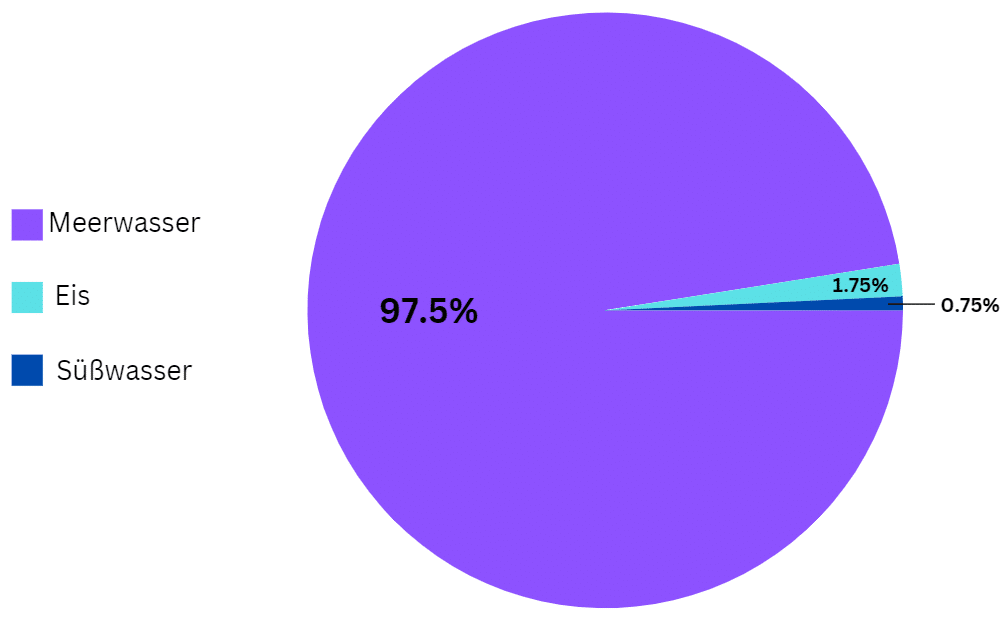
Approximately 70% of the Earth's surface is covered with water, but only 2.5% of it is freshwater, and about 70% of this freshwater is bound as ice in the polar caps and glaciers. This means that only 0.75% of all water on Earth is available for human use. Around 2.2 billion people live without a secure water supply, corresponding to roughly 27% of the world's population. Given that water is the foundation of life on Earth, this is a tragic statistic. Innovations for freshwater solutions are needed more than ever. Approaches such as desalination aim to tap into the 97.5% of unusable seawater as a new source of freshwater.
Reverse Osmosis Process
The desalination process describes the removal of mineral constituents from saline water. One of the most important methods to achieve this is desalination by reverse osmosis, which is most commonly used for small and medium-sized desalination plants due to the rapid availability and constant flow of pure water after installation. Thanks to improvements in the energy consumption of this method, it has become increasingly established in recent years. Nevertheless, improvements to current technologies are needed to make this method of drinking water production more accessible. New technologies that further reduce energy consumption contribute to broader availability.
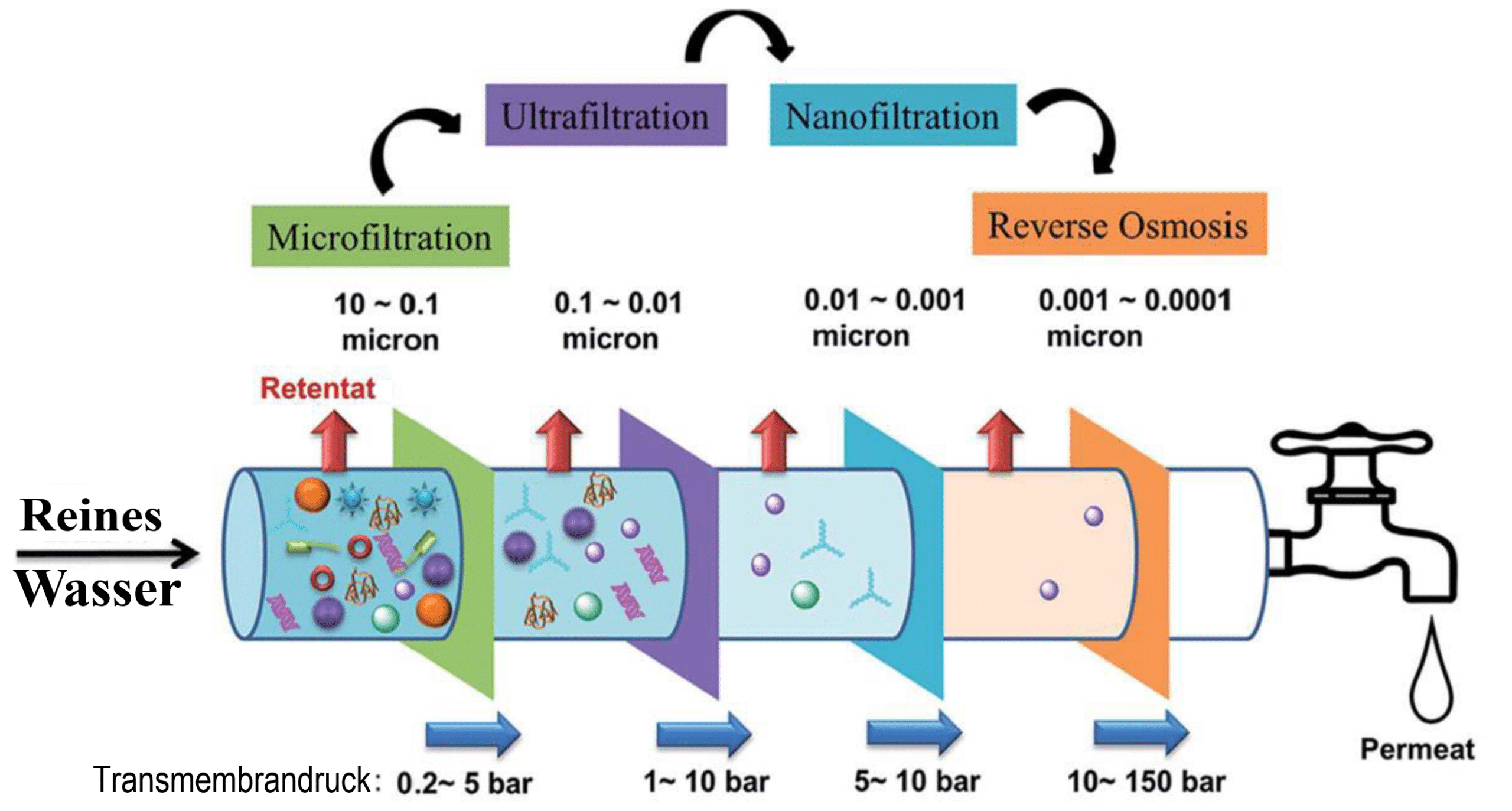
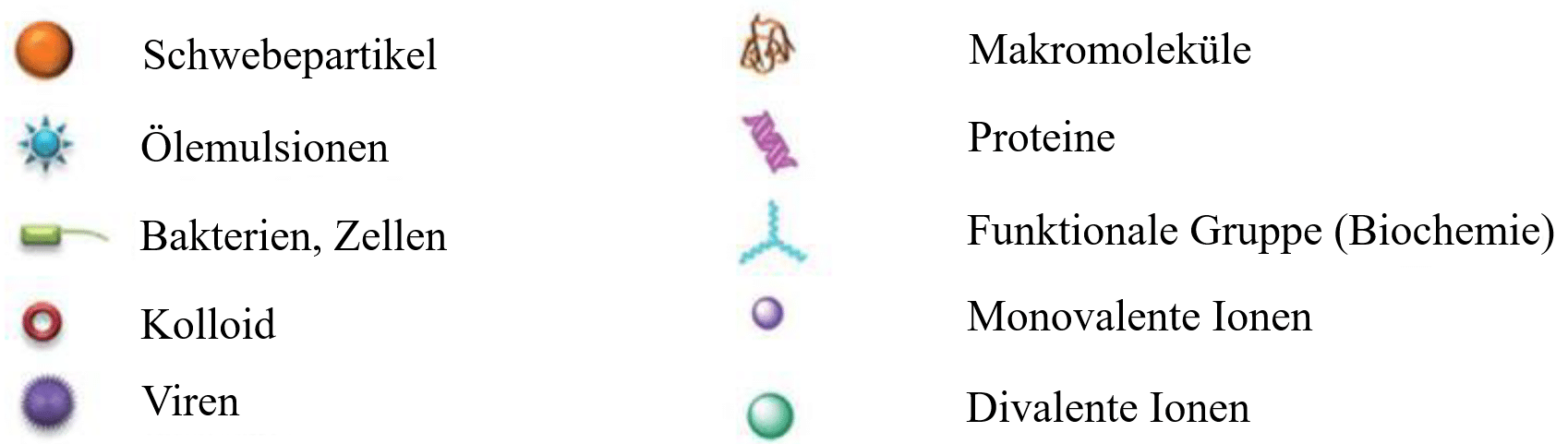
To desalinate seawater, the salt molecules must be separated from the water. One method for this is filtering seawater through reverse osmosis, as shown in Figure 2. First, larger molecules and particles must be removed through various filtration stages so that reverse osmosis can finally take place. A semi-permeable membrane is used to filter out molecules of size 0.1–1 nm.
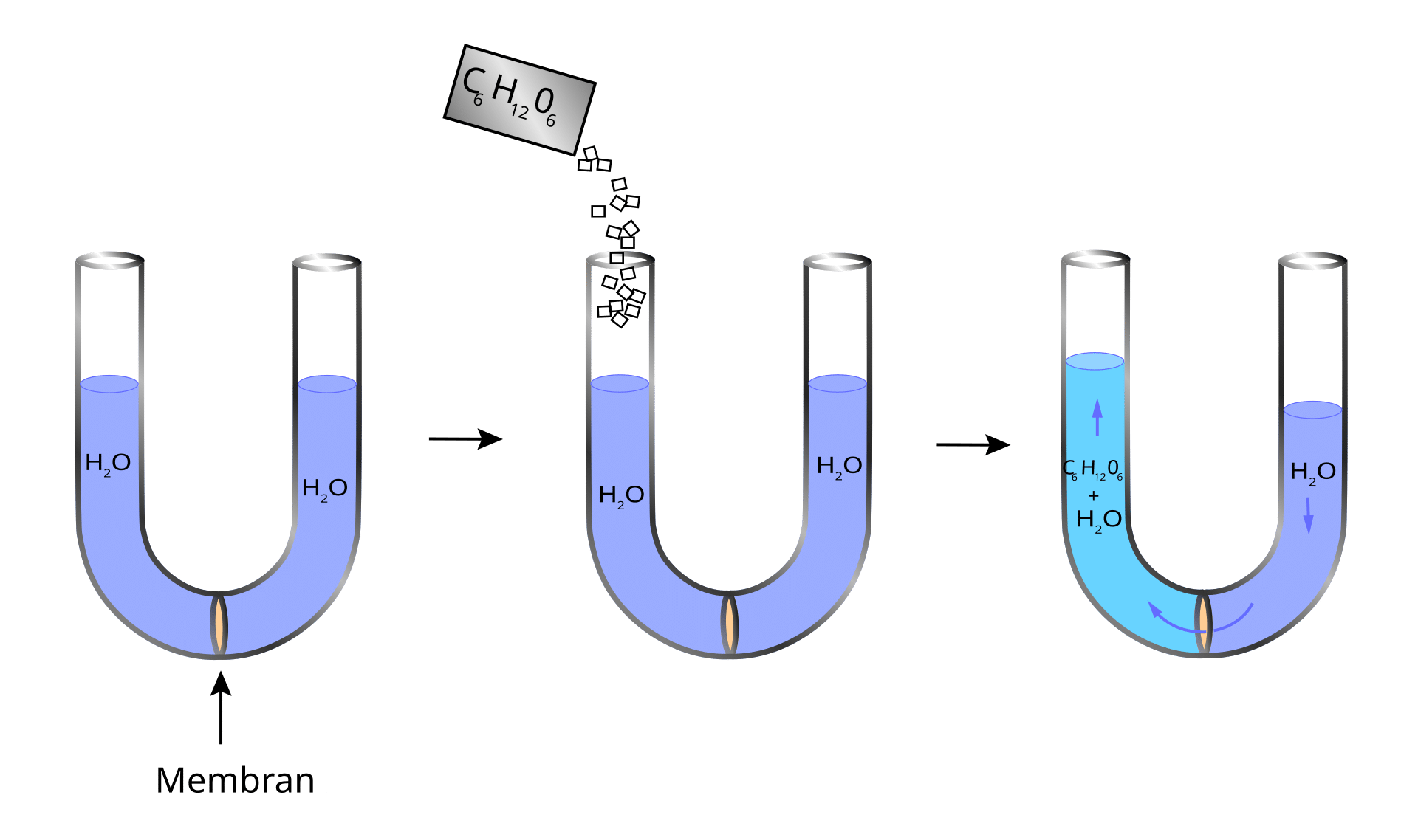
Reverse osmosis is so named because it is a process in which osmotic pressure must be overcome. Osmosis is a natural process that occurs when two solutions in a closed environment, containing different concentrations of dissolved substances, are separated by a semi-permeable membrane that retains the solute but not the solvent. This creates an imbalance of chemical potential. The solution with the lower concentration of dissolved substances has a higher chemical potential than the more highly concentrated solution. Water molecules pass through the membrane to restore the equilibrium of chemical potential. Since the solution is in a closed environment, the increase in volume of the solution with the higher solute concentration leads to a rise in pressure – the osmotic pressure.
For the separation of seawater (typically 35,000 ppm, 20°C), the reverse osmosis filtration system must overcome an osmotic pressure of 27 bar to prevent pure permeate (pure water) from flowing in across the membrane. To achieve a practical permeate flow rate, the operating pressure should be twice the osmotic pressure. The typical operating pressure for a reverse osmosis plant for seawater desalination is between 50 and 70 bar. In practice, this is a very high pressure, corresponding to a range of 500 to 700 meters of water column.
To prevent saturation of the membrane, a type of filtration known as cross-flow filtration is required, as shown in Figure 5. In this type of filtration, the dissolved substance (salt) is not retained in the membrane but flows off as concentrate (brine).
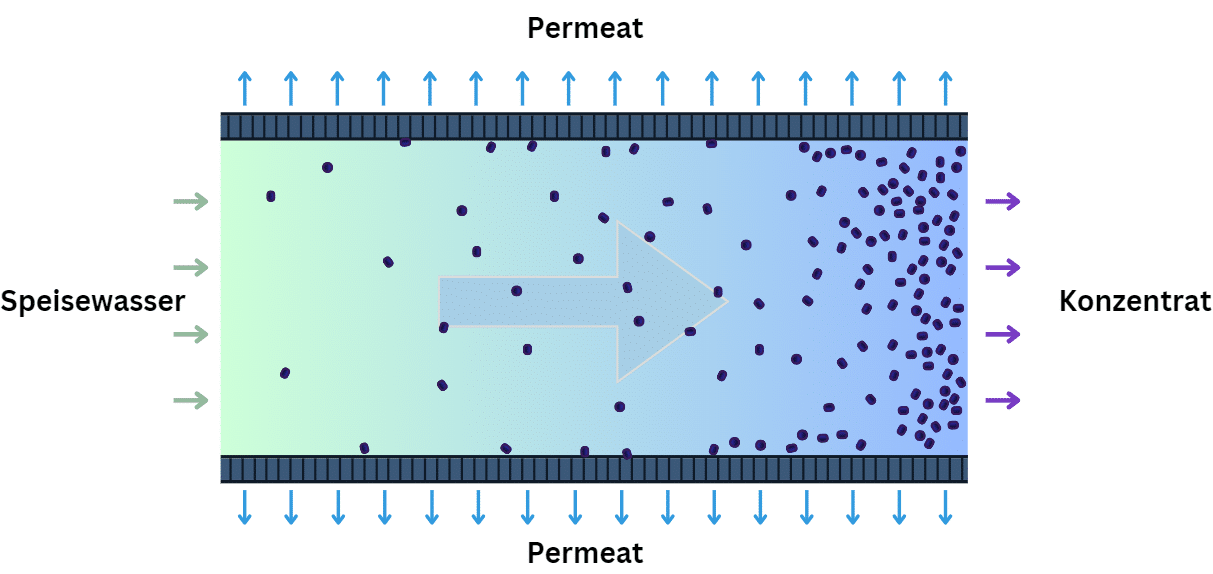
It requires a high amount of energy to bring the feed water (seawater) up to operating pressure. From Figure 4 it can be seen that this high pressure is maintained in the concentrate. This means that when producing permeate, all the energy used to pressurize the feed is wasted on the concentrate. This has been a problem since the invention of reverse osmosis desalination, and over the years several systems have been developed to recover the pressure energy from the concentrate and use it to pressurize the feed.
The various devices developed to recover energy from the concentrate are collectively known as energy recovery devices (ERD). The next section shows our revolutionary high-pressure solution consisting of a high-pressure pump and ERD, and how it compares with other high-pressure solutions with ERD.
Abacus Resale's Solutions for Seawater Desalination
The SALINO® Pressure Center revolutionizes seawater desalination by reverse osmosis with its patented and award-winning solution. Its compact design, consisting of a 4-in-1 technology, makes it extremely space-saving and thus perfect for compact container plants. It combines a high-pressure pump, energy recovery device (ERD), booster pump and electric motor in a single unit.
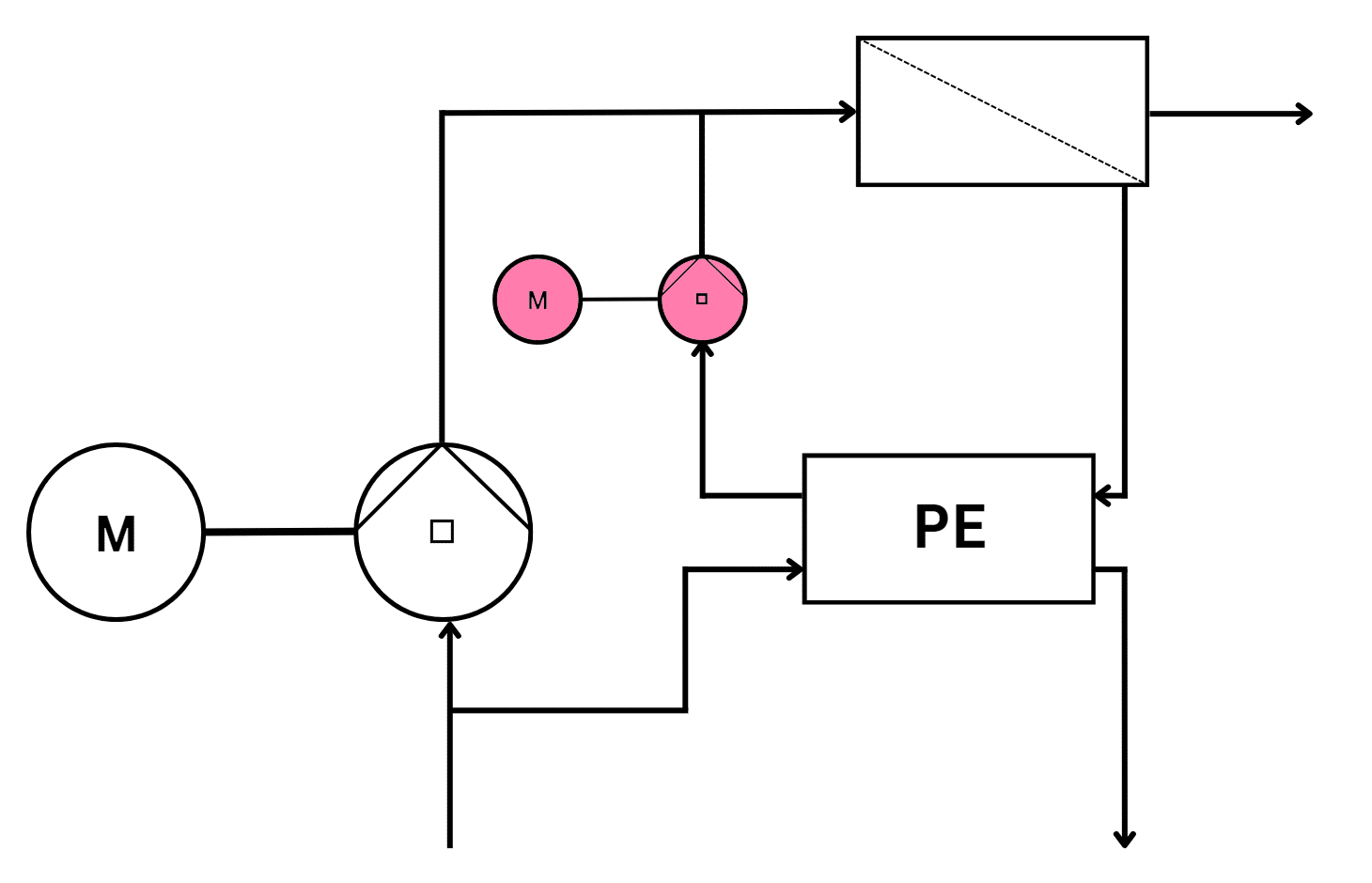
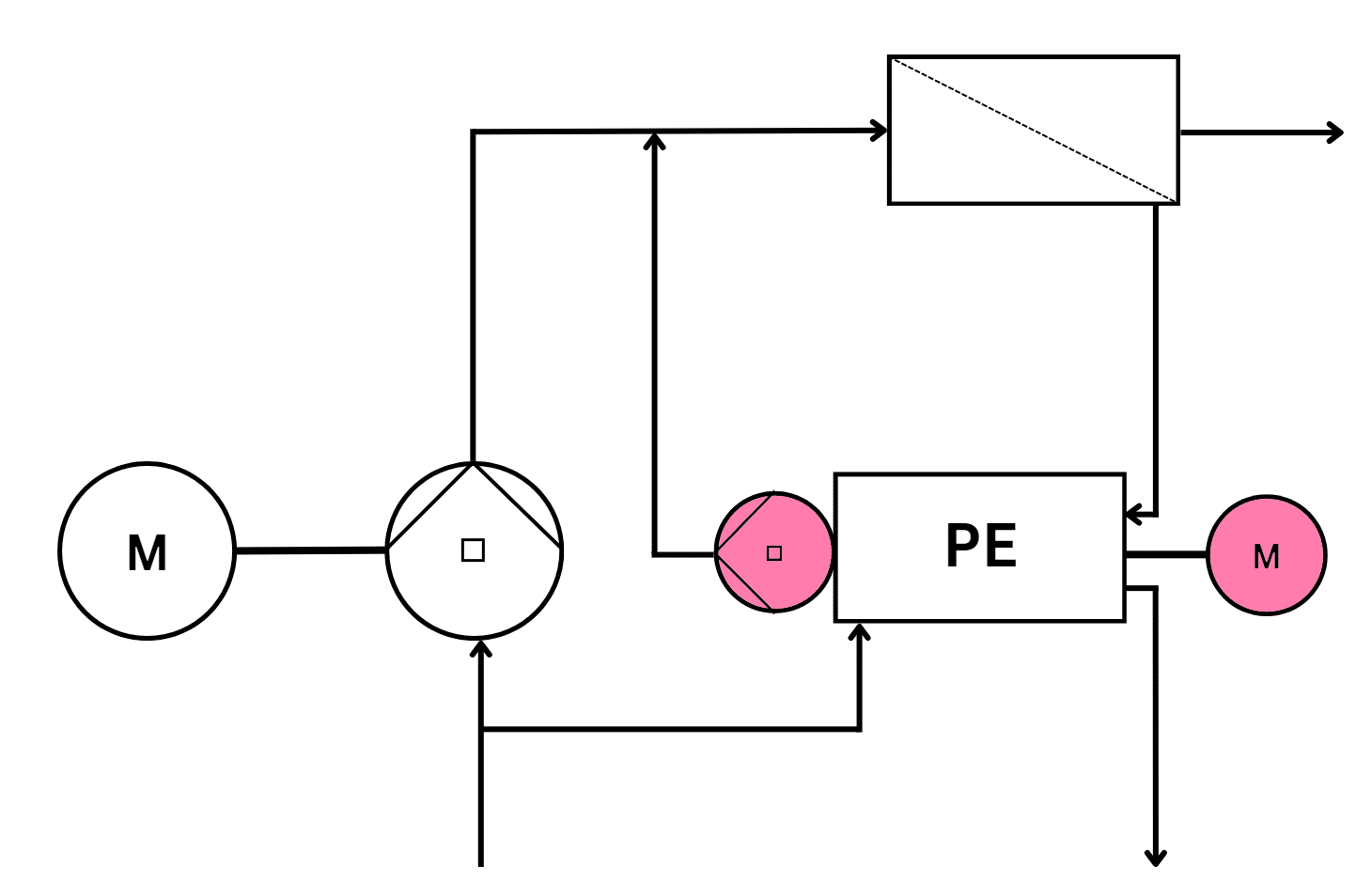
Other energy recovery systems require more components than the SALINO® Pressure Center because they use another motor to drive an additional booster pump (Figures 6 & 7) that compensates for the pressure difference, which is not necessary with the SALINO®. This additional pump and motor are part of the isobaric pressure exchanger or are connected in series with it. There are also pressure exchangers with turbochargers, such as the one shown in Figures 6 and 7, which have simpler configurations than the SALINO®. But since the SALINO® is a positive displacement device, it has a much higher efficiency at operating pressures than turbochargers, which are instead rotodynamic devices.
SALINO® Pressure Center
Low-pressure feed water (colored light blue) flows into the high-pressure pump (left part of the SALINO®, video 01:35). This stream is pushed to the high-pressure side (colored violet) by axial pistons rotating on a swash plate. On the high-pressure side, the feed water is filtered through the RO membrane.
In this video, the membrane has a recovery rate of 45%, meaning 45% of the feed water is filtered by the RO membrane into pure water. The remaining 55%, now high-pressure brine (violet), is fed back into the energy recovery unit.
In the energy recovery unit, the process runs in reverse order (video 01:55). The high-pressure brine moves the pistons rotating on a swash plate. The angle here is smaller than on the pump side and is proportional to the total volume of the fluid. When the brine drives the pistons and turns the pump shaft, energy is returned to the system and the brine loses pressure. The brine leaving the unit (light blue) is therefore at low pressure again.
Depending on the plant configuration, the ERD can return up to 70% of the energy originally supplied by the motor (video 02:15), making it highly efficient.
The use of an ERD is crucial for minimizing the overall energy consumption of the plant, which in the case of the SALINO® can be up to 70% due to its simple and highly efficient design.
The simple 4-in-1 SALINO® solution has the best energy efficiency and the lowest lifecycle costs in its class. It is easy to install and operate and extremely reliable in operation. For small and medium-sized plants in industry, on ships and in hotels, SALINO® Pressure Center units are the ideal solution.
Do you have questions? Contact us!
Our team is happy to help you. Call us or send us an email.